


Triple Seven Rook 4 EN B 2025
€4 750
- Betala säkert med kort
- Maila oss, vi svarar snabbt!
- Dessa rader kan ändras \*
\* Redigera dessa rader under Innehåll > Produktsida
Beskrivning
Durable by Design, Lightweight by Nature
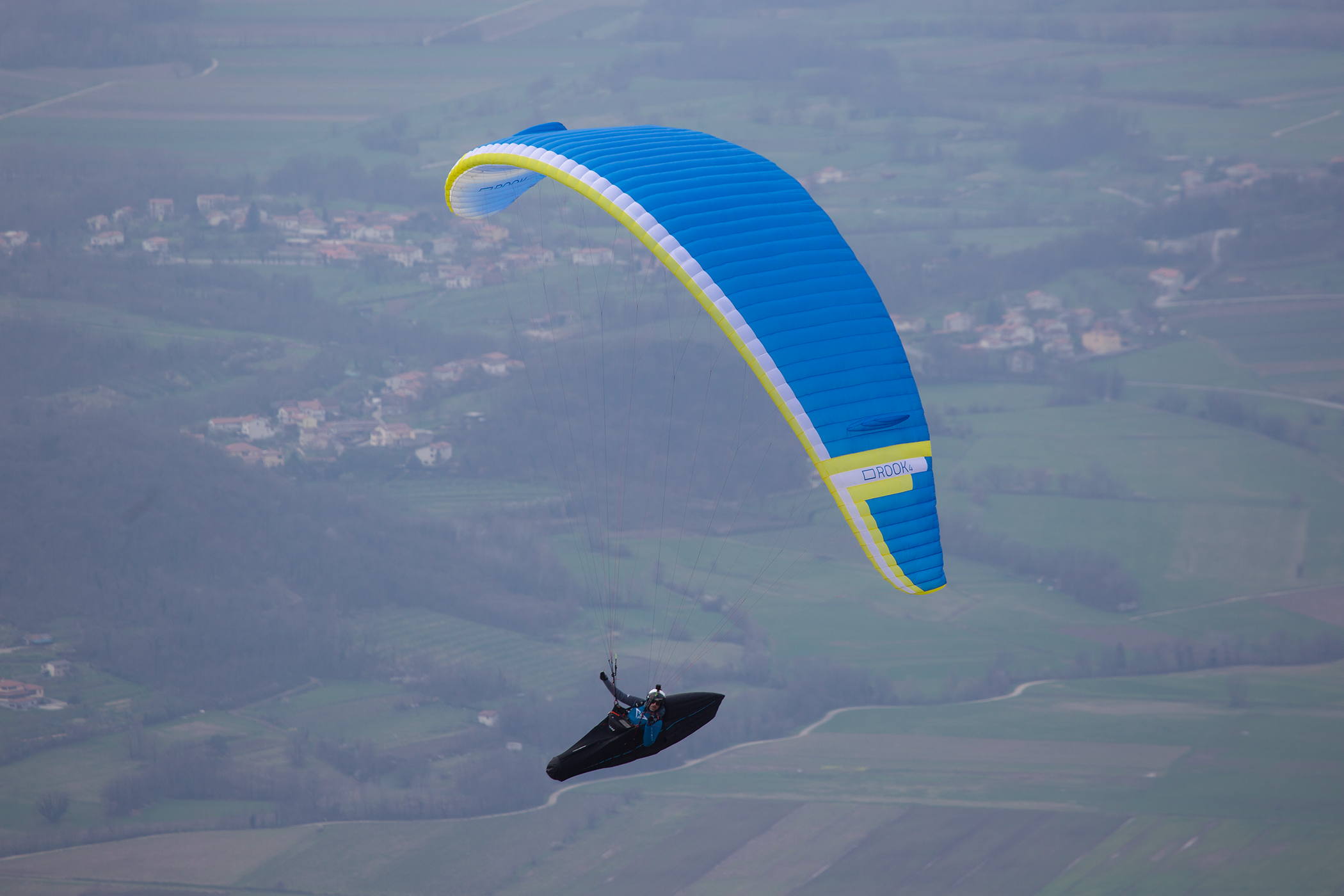
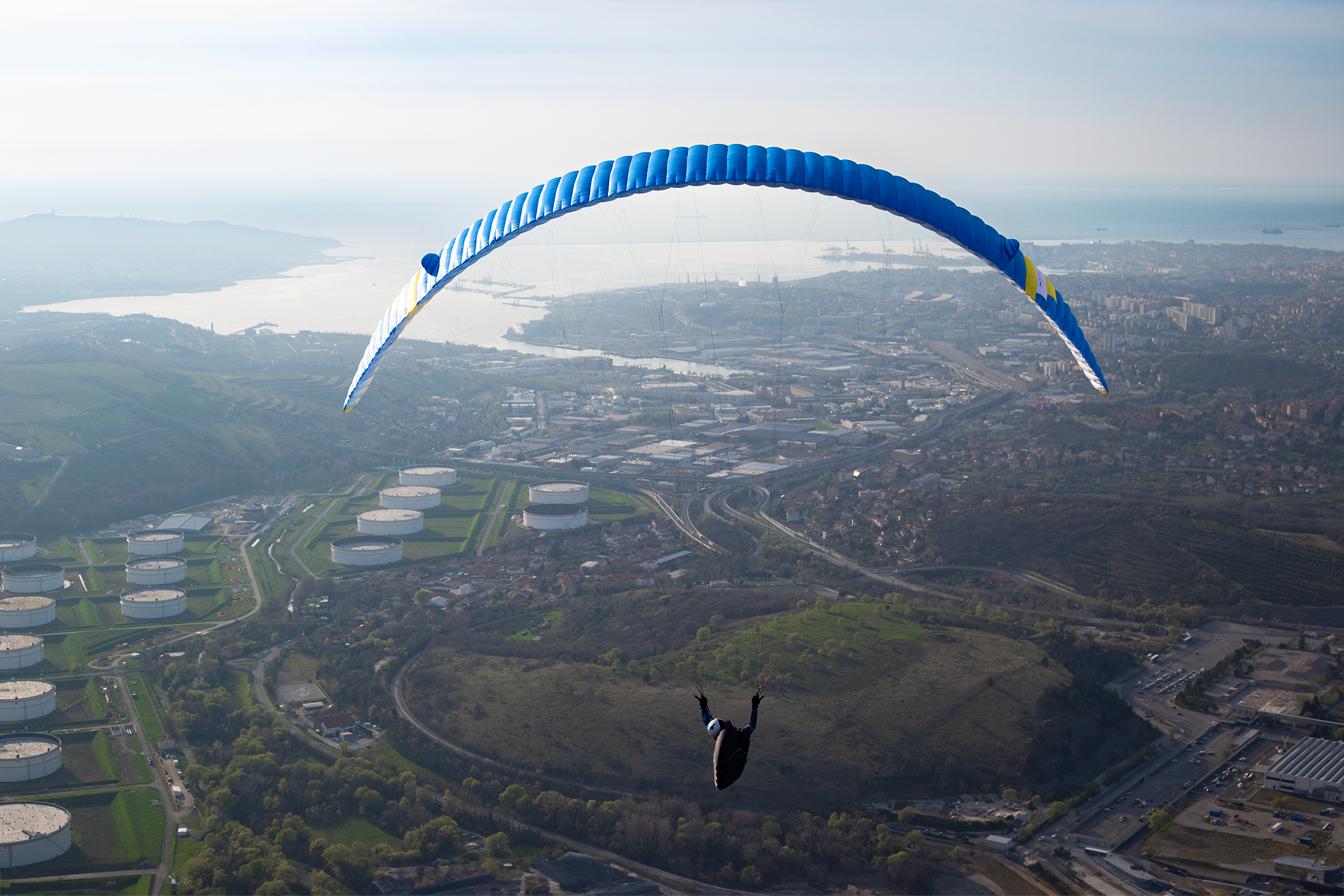
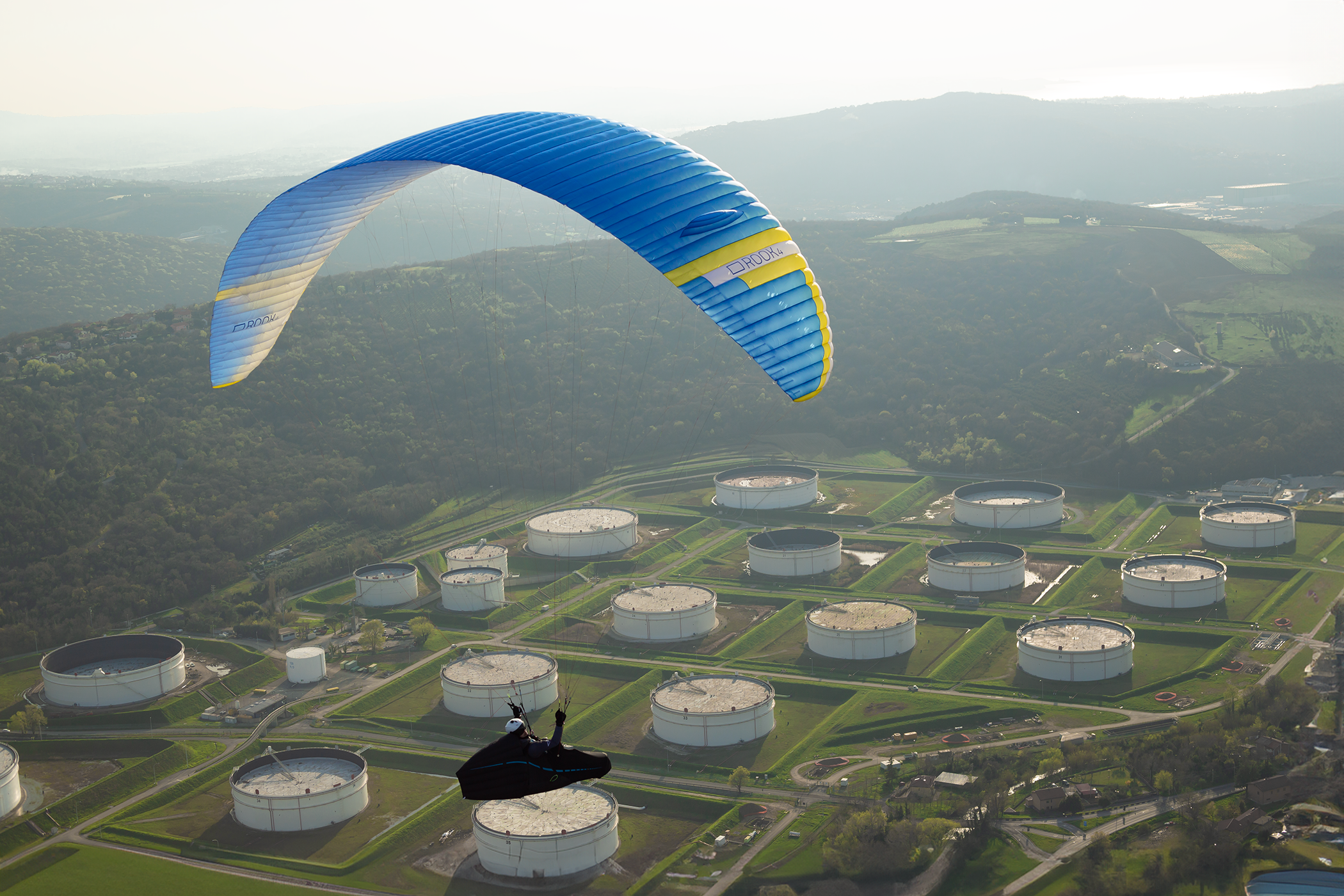
The fourth iteration of the famous Rook model is no more than revolutionary. The design concept shifted to a hybrid lightweight construction optimized for endurance with carefully placed materials throughout the canopy. The Rook 4 pilot will benefit from the feather like take off that won’t surprise in any condition and will take him on a care free hard and long XC adventures deep in the wild of any corner of the earth. Enjoy the benefits of a new BC system that makes active flying as fluid as on two liners. The Rook 4 is the wing tailored for pilots who demand a perfect balance between super high performance and the high passive safety of the B class.
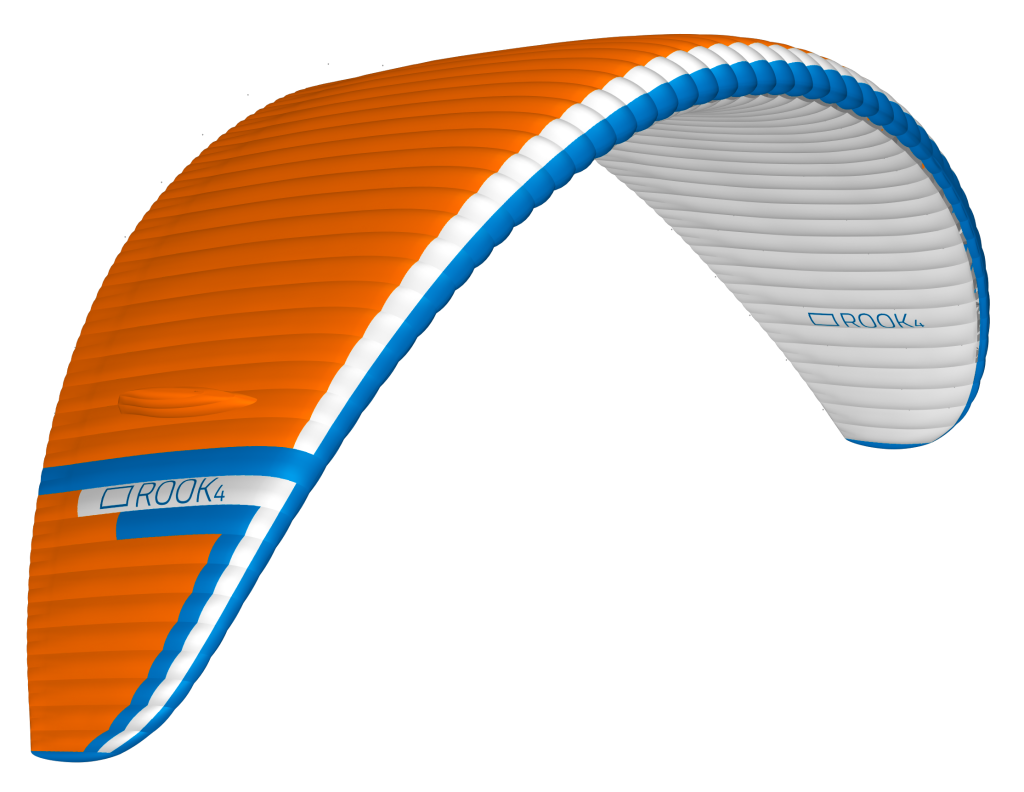
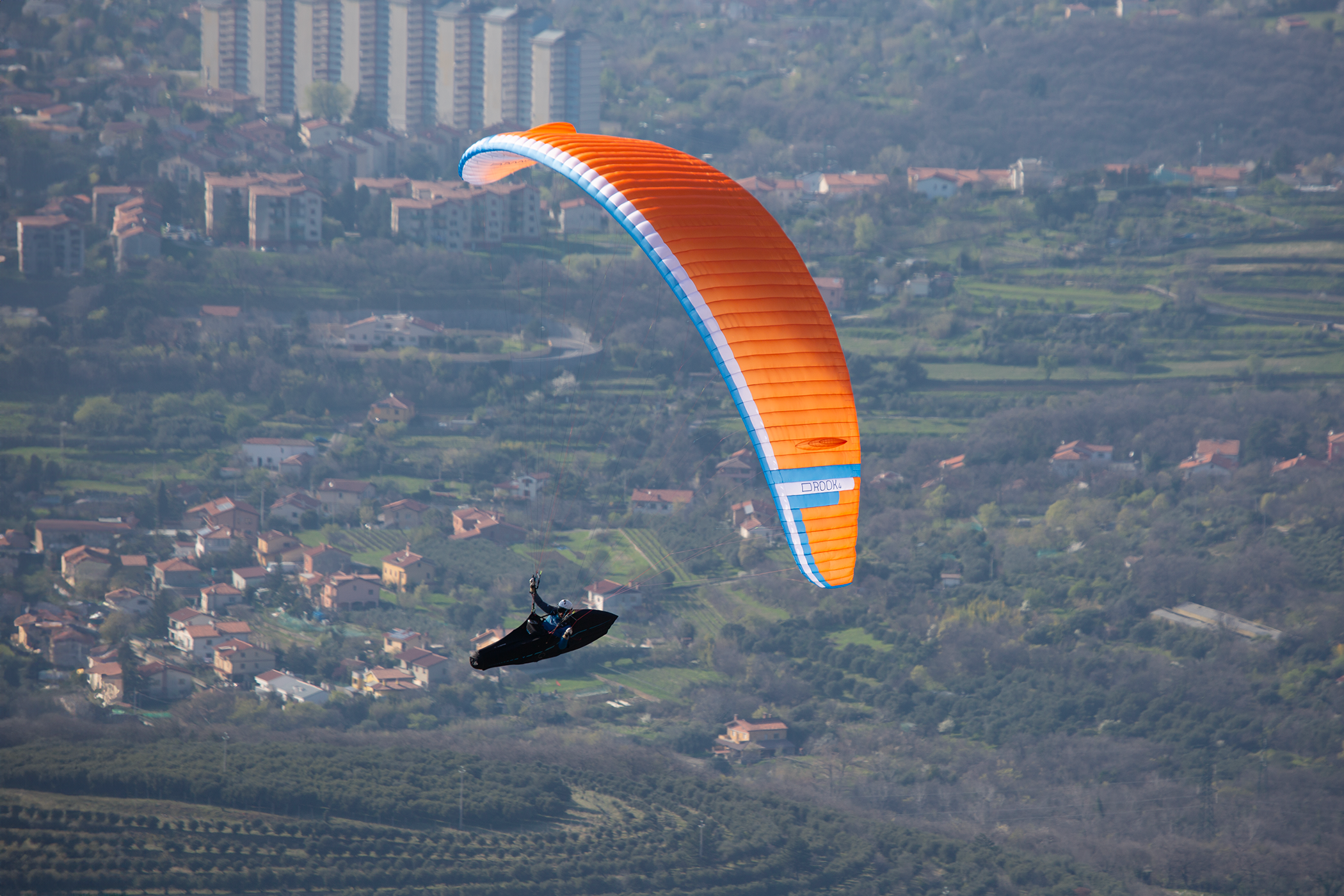
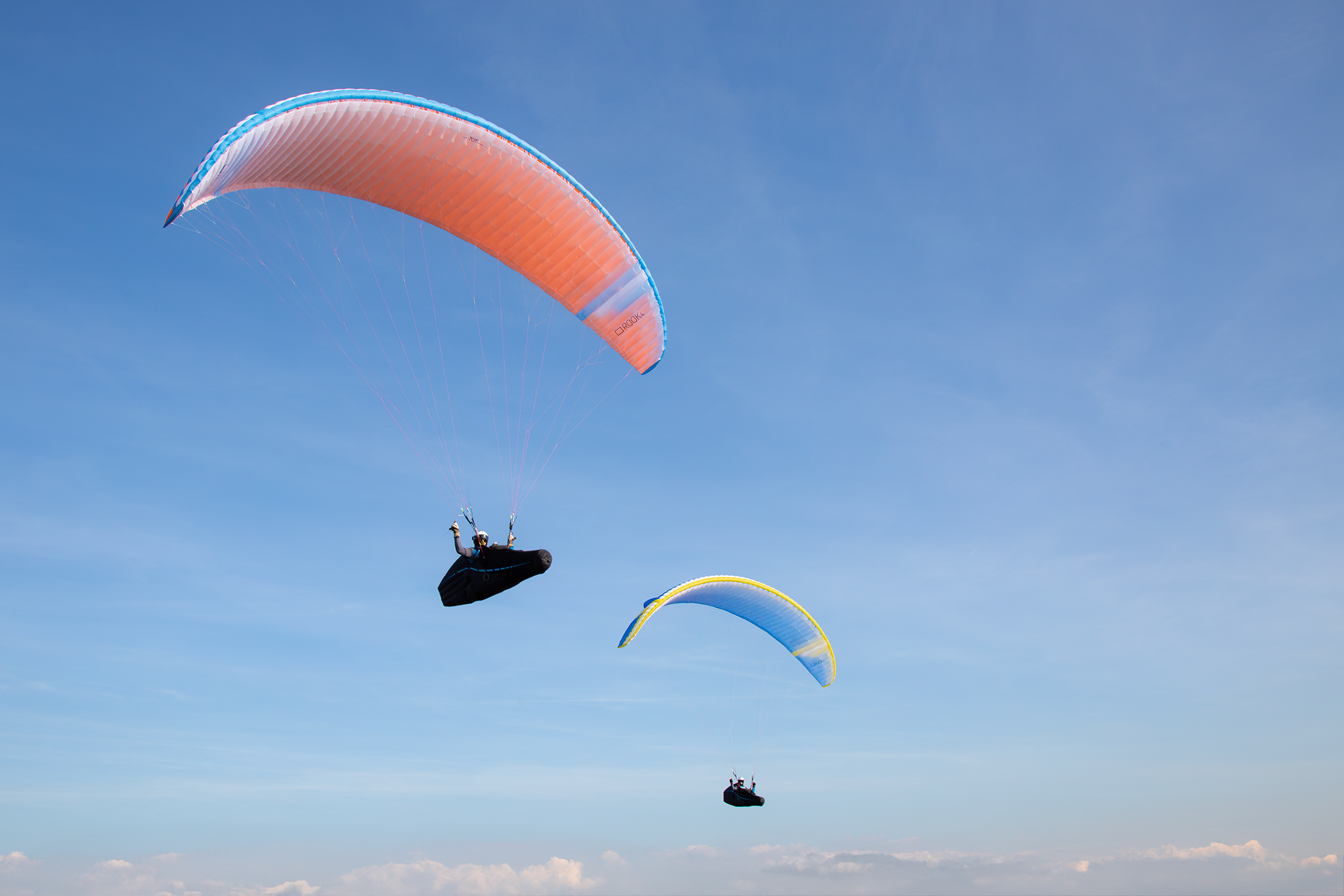
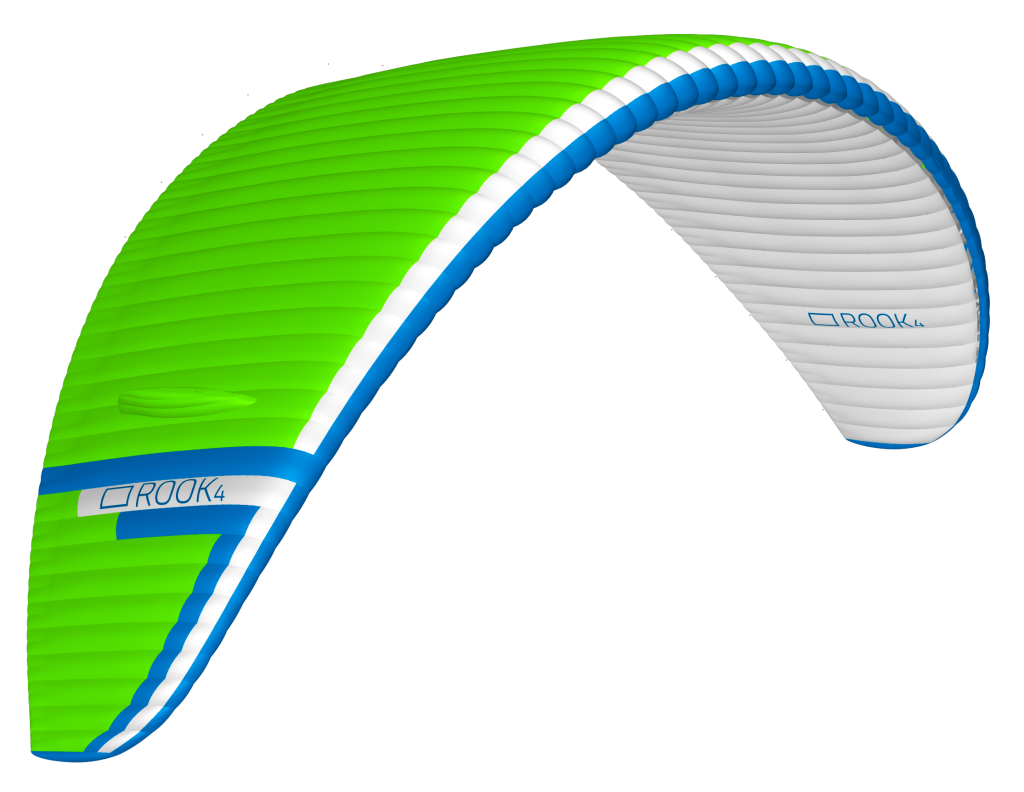
Green Blue Orange
Designer’s note
With the Rook 4, I had the opportunity to integrate all of my current knowledge with the various projects we’re currently running at Triple Seven. From the airfoil to the winglets to the new approach to arc design, it all reignited my innovative mindset. I am exceedingly pleased with the outcome of the new wing. I eagerly anticipate seeing pilots fully leveraging the safe and high-performance package that the Rook 4 undoubtedly represents.
Aljaz Valic – Designer
Who is it for?
The Rook 4 is positioned within the high B class category. Pilots with a considerable amount of active flying experience will find the Rook 4 easy to handle. Whether you’re transitioning up from a lower class or moving down to the B class, you’ll discover that the Rook 4 meets the criteria for safety and performance. Its compact packing volume and excellent takeoff characteristics make it well-suited for vol-bivouac adventures, enabling pilots to confidently explore distant XC areas.
Winglets and new arc shape
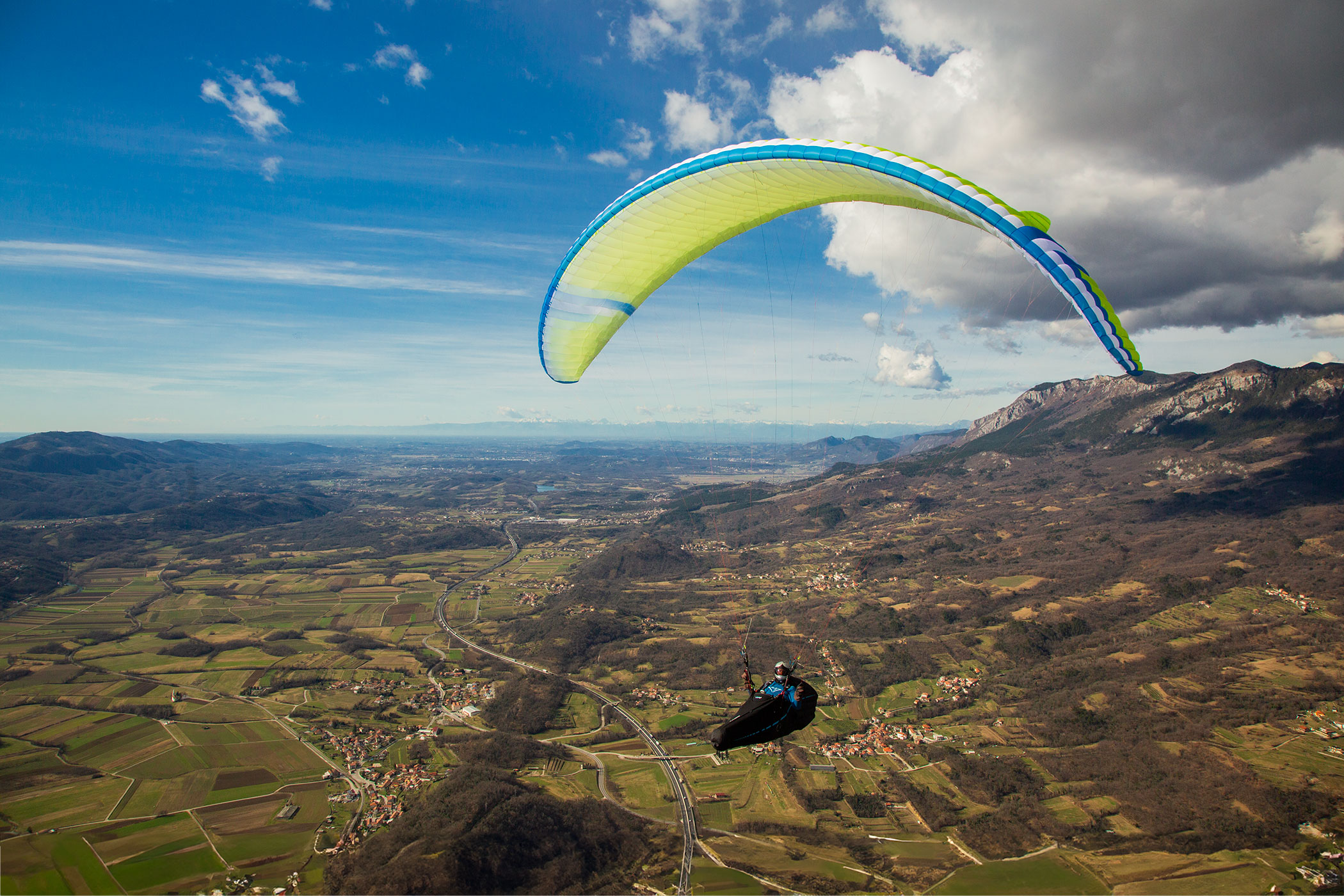
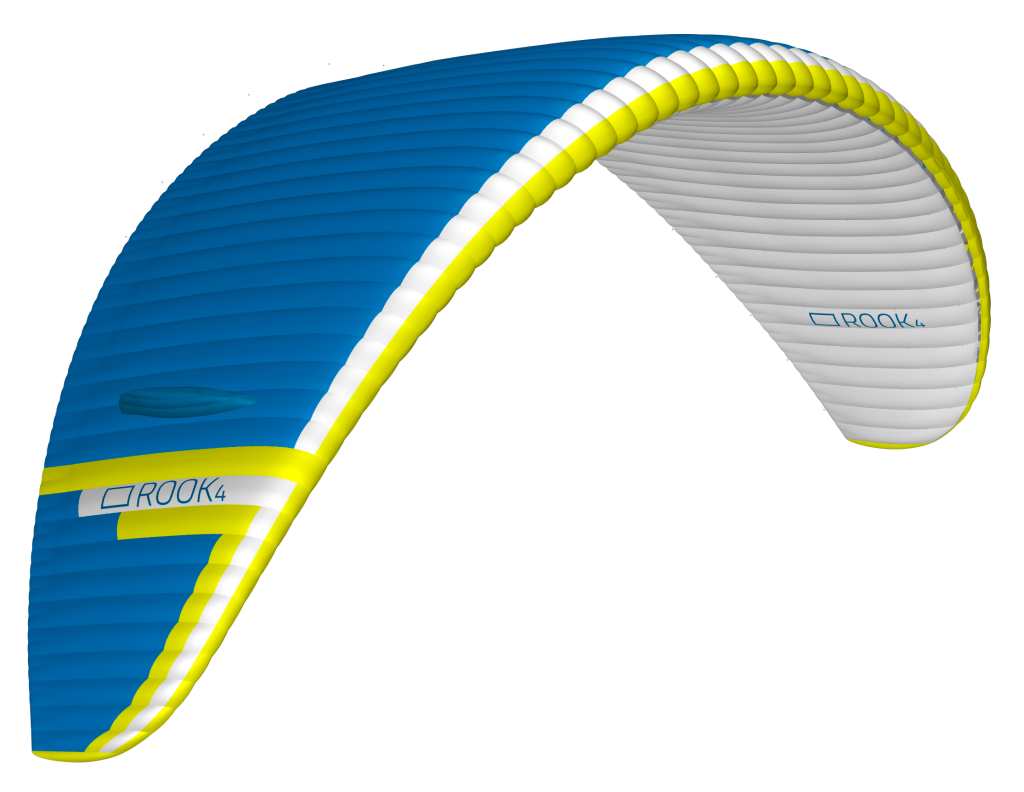
With the integration of winglets into the design of the Rook 4, new design opportunities have emerged, wherein a more prominent arc significantly enhances the flying experience. The winglets aid in stabilizing the wing during rolls, resulting in a canopy arc previously exclusive to higher classes, now accessible in lower classes with the Rook 4. The pronounced arc facilitates a more constant and higher spanwise side force, creating a more rigid, better-supported, compact canopy. Side collapses are less reactive, affording the pilot more time to react if necessary. Additionally, banking changes while turning are now more linear and smooth.
Effortless liftoff
With Rook 4, we placed significant emphasis on refining the takeoff behavior during wing design. Through carefully optimized internal construction, reinforcing PA11 plastics, and strategically positioned lines, we’ve attained an effortless takeoff experience, making even more adventurous launches feel like a simple step into the air. The internal construction is transferring the force from the attachment point to the top of the canopy from the very first pull, giving you a gentle rise of the canopy in any given conditions. This ensures a smooth and controlled ascent, enhancing the overall flying experience for pilots of all skill levels.
Durable lightweight hybrid
The Rook 4 is a hybrid lightweight wing with an optimized blend of materials, reducing weight without sacrificing durability and lifespan. High-stress areas and surfaces prone to ground contact or UV exposure are crafted from conventional materials (Skytex 38, MJtex 32). At the same time, weight is minimized in areas where the wing remains intact or is shaded during flight (Skytex 27). Internal construction uses a 40 and 32 Porcher mix to reduce glider weight based on stress loads. This material composition ensures a prolonged lifespan while meeting desired weight specifications.
New pitch control system
Race towards your goal with new risers featuring a fluid pitch system, ensuring a seamless transition of information to the pilot, correcting pitch movement precisely when and to the extent needed. This provides you with an unparalleled performance advantage, especially when efficiency in flight is crucial. With reduced friction in the system, the speed system also experiences notable benefits, requiring significantly less force for operation with your legs.
Magix PRO lines
The Rook 4 showcases a feature set, featuring state-of-the-art Magix Pro Dry Lines procured from Edelrid, with each line meticulously color-coded for effortless identification. The latest version of the Magix Pro lines boasts a remarkable 60% increase in humidity resistance and, notably, demonstrates prolonged length stability, thereby extending intervals between visits to inspection centers. The overall weight of the lines has been significantly reduced, aiding easier canopy ascent due to the lesser load in the line area.
Precision is the key
The Rook 4 and the latest Triple Seven models are manufactured with accuracy and precision using laser cutting technology. We have abandoned the conventional method of hand-cutting wings because it often results in significant errors due to the large number of pieces in a paragliding canopy. Despite the additional time and costs incurred in production, we have shifted the entire cutting process to laser cutting, resulting in a canopy that is made precisely to the last millimetre.
TECHNICAL DATA AND SIZES
Size S MS ML L
Number of cells 61 61 61 61
Projected area (m2) 19.3 21.2 22.7 23.8
Flat area (m2) 22.9 25.1 26.9 28.8
Projected span (m) 9.1 9.6 9.9 10.1
Flat span (m) 11.4 12.0 12.4 12.7
Projected Aspect Ratio 4.43 4.43 4.43 4.43
Flat aspect ratio 5.75 5.75 5.75 5.75
Glider weight (kg) 3.8 4.0 4.2 4.5
In-flight weight range (kg) 70-87 80-98 90-108 100-119
Certification LTF/EN B B B B
MATERIALS
CANOPY FABRIC CODE
Upper surface MJ32MF P/D Coating
Leading edge Porcher Skytex 38
Bottom surface Skytex 27 Double Coated
Profiles Porcher Skytex 40/32 Hard finish
Suspension and main lines A-8001 Magix Pro
RISER FABRIC CODE
Riser material 7 mm Kevlar-reinforced Nylon webbing
Speed system Polarwave pulleys
Carabiners Delta Maillon
Brake attachment Magnet clip-in system
MAIN FEATURES
Lightweight hybrid
Pronounced arc in tune with winglets
SDT Segmented Diagonals Technology
BPI Back Position Intake technology
OCV Optimized cross vents
EN-B, LTF-B certification
SCOPE OF DELIVERY
Glider Rook 4
Inner bag
Glider strap
Triple Seven T-shirt
Repair kit
Welcome card
Ziad Basill reviews the Rook 4
Triple Seven Rook 4 MS. 80-98
I finally got the new high B glider from Triple Seven, the Rook 4 which replaces the amazing Rook 3.
Back for my Rook 3 review, I mentioned an excellent climb rate in weak and strong, with very good handling. The only issue was the launching behavior and the little hump on the leading edge which was noticed later on. Could 777 manage to make a better version? Let’s see…
First here is the 777 link for the Rook 4 as you can see all the details. https://777gliders.com/gliders/rook-4/
The construction, details, lines stitching, etc, seem on the higher end of quality. The new risers look nice, robust, and refined all together.
I flew the Rook 4 MS at 95 all up, and I could feel that this would be an optimum weight for everyday use. You can of course fly it at max if you need the edge in speed and efficiency. But it seems that at 94…95 everything looked very smooth.
Launching:
Even in light wind, the Rook 4 launches smoothly without any hard points. The launching characteristics have improved a lot over the Rook 3. Problem solved.
In the air:
Brake feel:
The Rook 4 brake travel is slightly longer than the Rook 3 but still quite direct and efficient. The pressure on the first part after the 10 cm gap, with + 10 cm is moderate to light, then after +10 cm, they are moderate. I can describe the Rook 4 as an agile glider for the B category. The handling and authority on the brakes are very well balanced for a clean performance turning radius. The brake feel has the right spices to get a good pilot well satisfied while coring. The Rook4 can turn tightly into the core, and also flat turns can be achieved flawlessly.
Despite my high regard for the Maestro 2 handling, I was impressed and very satisfied by the Rook 4 brake authority which seems calm, and more educated for performance and feel.
For example comparing the handling (Rook4/Mentor 7 S), while the brake authority on the Mentor 7 S size is very good, those tiny linear feel in the centimeters you are pulling on the brakes are much more available on the Rook 4.
Comfort:
I flew the Rook 4 in multiple conditions on my Impress 4 harness. For a high B glider the overall movements and roll, are slightly less than the Maestro 2 and slightly more than the Rook3.
The Rook 4 is more comfortable to fly than the Maestro 2, and also it has a feel of a much-taught structure without any soft tips, plus a very homogenous feel.
Perhaps the Mentor 7 S feels more comfortable in movements, But I personally favor a high B balanced movements as the Rook 4 delivers.
Some pilots reading this will immediately misunderstand what I implied. I meant a high B pilot should get a well-balanced feel of the right spices under a glider rather than perhaps a too-dampened one.
Glide:
I flew the Rook 4 next to my friend ‘Boudi’ on his Rook 3 MS 75-95 at 94 all up. We did a lot of glides and climbed together all the way. This was a marvelous test for both of us to see and feel if there were improvements or just a new model. I also flew with my friend ‘Sayed’ On his Photon ML ! while he flew loaded at 105 all up. Of course, it’s another category, but it was also a good idea to see where the Rook 4 stands out in multiple conditions!
With the Rook 3 next to me the glide in a relatively calm air at trim speed after 5 km always got the Rook 4 with around 5…7 m higher.
Other glides were also made in lift areas facing the sea breeze, and we both could see that the Rook 4 seemed to get even higher clearance.
Pushing on the speed bar with moderate pressure on the rook 4 also gets the same height clearance.
At full speed with both gliders next to each other, the full-speed glide seems very close for both.
Flying next to the Photon ML, showed that at trim speed the Photon is +1.5 km faster. Applying the speed bar to match the Photon ML I could lose a few meters after 5 km in calm air.
Once facing the sea breeze, the Photon is from a different level for sure, but still, the Rook 4 with persistence on the speed bar could follow at a much slower rate. I was having fun with my friend teasing him a bit on the Rook 4, but knowing that if I pissed him a lot…he will probably push the speed bar and disappear